
Academies: key facts
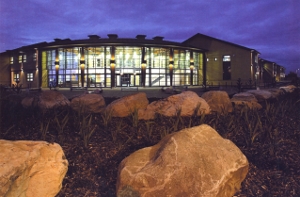 The Academies programme was introduced in March 2000, and the first Academy projects were announced in September the same year, with a target of 200 Academies open in new buildings or in the pipeline by 2010. In March 2006 ministers announced that PfS would assist in the delivery of the Academy programme. In March 2007, the Government announced an increase in the target to 400.
Academies are publicly-funded, independently-managed schools that aim to provide first-class free education to local pupils of all abilities. Other freedoms include setting their own pay and conditions for staff, freedom from following the National Curriculum, and the ability to change the lengths of their terms and school days.
Until the 2010 election, Academies were created from failing schools, or those either in special measure or deprived areas. All Academies benefitted from a sponsor, whose skills and advice brought a distinctive, and often hugely successful, approach to the school's leadership. Sponsors came from a wide range of backgrounds - business, faith and voluntary groups and educational establishments - and provided headteachers and staff with new opportunities to develop educational strategies to raise standards and contribute to diversity in areas of disadvantage. In most cases, Academies were opened in new state-of-the-art buildings, or were given new buildings soon after converting at Academy status.
The Department for Education (DfE) meets the capital and running costs in full and they are funded at a level comparable to other schools.
In May 2010, the new Secretary of State for Education, Michael Gove, proposed new legislation that would allow any school rated 'Outstanding' by Ofsted to apply to become an Academy. Under the new legislation, the Academies programme will also be opened up to primary and special schools. Unlike existing Academies, no external sponsor will be required, although schools applying for conversion to Academy status will be expected to sign up in principle to support another school to raise attainment.
Schools converting to Academies under this new legislation will remain in their current school buildings. Any decision on new school buildings will be announced after the Schools Capital Review and the Spending Review in late 2010.
More about the May 2010 announcement and passage of the legislation through Parliament can be found on the DfE website.
Academies and PfS
In 2006, the responsibility for delivering the Academies building programme was transferred from the Department to Partnerships for Schools (PfS), and in doing so, was integrated into the wider Building Schools for the Future (BSF) programme. As with BSF, policy ownership remains with the Department for Education, who also continue to be responsible for sponsor relations where relevant.
The integration of Academy delivery into BSF allowed PfS to harness the same economies of scale for the Academies programme that were possible through BSF before the BSF programme was halted in June 2010. The procurement model - the Local Education Partnership (LEP) - specifically developed for BSF, delivered significant savings to the Academy programme.
In areas not yet benefitting from BSF investment, or where no LEP was established, Academies were procured through a national Design & Build framework established by PfS in January 2007. In November 2009 the PfS Contractors Framework was launched as a successor to this framework.
Academy sponsors benefit from the involvement of PfS, as they no longer have day-to-day responsibility for the timing, cost and quality of schools' design and construction.
In 2003, the Department commissioned PricewaterhouseCoopers (PwC) to undertake a five-year longitudinal evaluation of the Academies Programme. The annual reports from PwC and the Department's responses to these reports can be read and downloaded from the publications section of The Standards Site.
Academies Process
Currently, new Academy buildings can be delivered in two different ways. One-off procurements, where Academies (either singly or in groups) were in need of new buildings outside the timetable of the local BSF programme, buildings were procured through the PfS Design & Build framework, now the Contractors' framework.
Documents and guidance for procurement through the Contractors' framework can be found in the Library.
Academy buildings in areas where a BSF project was ongoing, with an operational LEP (or equivalent approved procurement vehicle) established, were dovetailed into BSF and delivered by the LEP. With the cessation of the BSF programme, those Academy buildings in projects past financial close will continue to be delivered by LEPs.
The standard BSF documents are used for the procurement of Academies through the LEP.
The results of the Schools Capital Review and the Spending Review in late 2010 will determine whether 'Outstanding' schools converting to Academy status will receive new buildings in due course.


